

Hindu Scriptures
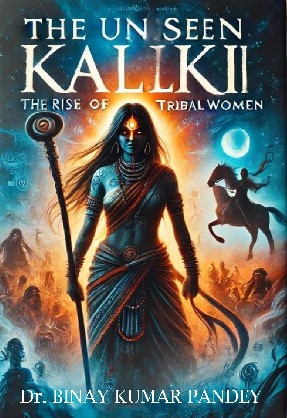
My journey through the heart of Jharkhand began as an academic pursuit, a mission to uncover the untold stories of the Santhal community and their rich cultural heritage. But what started as a research project for my PhD transformed into something far deeper—a profound encounter with a forgotten history, an awakening to the resilience, wisdom, and hidden strength of tribal women who, in their quiet dignity, carry the essence of something ancient and powerful. As I traversed the villages of Santhal Parganas, I immersed myself in the lives of the people, especially the women whose voices had long been muted in the grand narrative of history. I sat with the elders, listened to the laughter of children, and shared countless cups of tea with the women who toiled under the sun in the fields, bearing stories passed down through generations. It was in these conversations, among the red soil and the rolling hills of Jharkhand, that I began to unravel something extraordinary. The villagers—especially the women—told me stories that spanned across generations. These were tales of gods and goddesses, of spirits and supernatural beings, of triumphs and struggles. The mythological stories they shared were not simply folklore; they were deeply interwoven with the rhythms of their everyday lives. In the Santhal’s oral traditions, I found a unique blend of history and myth, of personal experiences and divine interventions. But it was the women’s stories that stood out the most. From the tales of Karam Baha, a goddess once revered but now forgotten, to the stories of brave women who faced oppression with quiet resilience, I began to see a common thread between these folk tales and the stories from Hindu mythology that I had studied during my academic years. I began to ask myself: Could the Kalki, the prophesied avatar of the future, not be a male warrior riding a white horse as traditionally imagined in Hindu texts, but rather a woman—one who has been hidden in plain sight, her power silenced by centuries of patriarchy? This book is the result of that exploration. "The Unseen Kalki: The Rise of Tribal Women is not just a collection of stories; it is a journey of connection, discovery, and awakening. It is the story of how the myth of Kalki—the savior destined to end the dark age of Kalyug—may very well find its embodiment in the women of the Santhal tribes. These women, who for centuries have been oppressed, marginalized, and unheard, are the true unsung avatars—powerful, resilient, and capable of rising against all odds. Through the eyes of the Santhal women, I came to understand that Kalki is not a singular figure, but rather a symbol of transformation—one that has lived within these women all along, in their courage, in their stories, and in their silent defiance against a system that seeks to suppress them. In this book, I have woven together the narratives I gathered from the villagers of Jharkhand—stories of gods, goddesses, and spirits, interspersed with the lives of modern-day women whose experiences mirror the mythological struggles of the past. The conversational format of these stories serves not only to bring these voices to life but also to connect the past and the present, revealing how the spirit of Kalki lives on in the everyday struggles of tribal women. As I reflect on my time spent in the villages of Jharkhand, I realize that this journey was not just an academic exercise, but a spiritual awakening. The women of the Santhal community are not just survivors; they are warriors—guardians of an ancient wisdom, keepers of forgotten stories, and, perhaps, the very embodiment of the Kalki prophecy itself. In the pages that follow, you will walk alongside me through the villages of Jharkhand, hear the voices of the Santhal people, and discover how, in the most unexpected places, the unseen Kalki rises—not as a mythological figure of old, but as a woman, a mother, a sister, and a leader whose time has come. This is their story. And, in many ways, it is our story too.